
250 Black Cohosh Seeds | Medicinal Herb Seeds
Common Name: black cohosh Type: Herbaceous perennial Family: Ranunculaceae Native Range: North America Zone: 3 to 8 Height: 4.00 to 6.00 feet Spread: 2.00 to 4.00 feet Bloom Time: June to July Bloom Description: White Sun: Part shade to full shade Water: Medium Maintenance: Low Suggested Use: Naturalize Flower: Showy, Fragrant Tolerate: Rabbit
Easily grown in average, medium moisture soils in part shade to full shade. Prefers humusy, organically rich, moisture-retentive soils. Foliage tends to scorch and otherwise depreciate if soils are allowed to dry out. Best sited in locations sheltered from strong winds. This is a slow-to-establish plant.
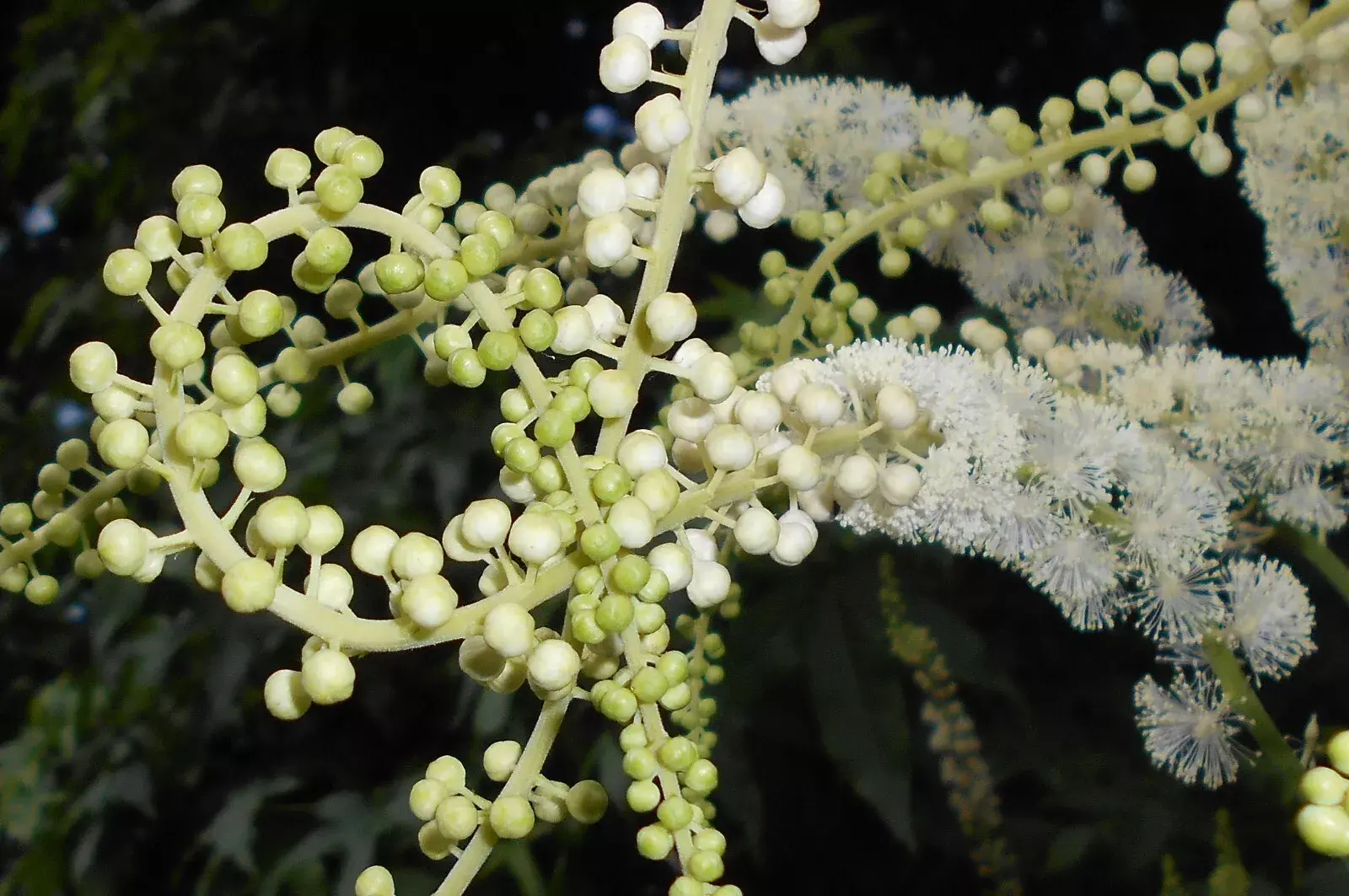
Actaea racemosa, commonly called black cohosh, is an upright, Missouri native perennial which occurs in rocky woods in the Ozark region of the State. It typically grows to a total height (foliage plus flowering spikes) of 4-6’, but under optimum conditions can reach 8’. Small, numerous, creamy white, fragrant flowers appear in late summer to early fall in long, terminal racemes resembling fluffy spires (typically 1-2’ long) rising well above the foliage on wiry stems. Astilbe-like, deeply cut, tripinnate foliage is an attractive deep green. Synonymous with and formerly known as Cimicifuga racemosa. All plants in the genus Cimicifuga have recently been transferred to the genus Actaea.
Genus name is the Latin name adopted by Linnaeus from Pliny.
Specific epithet refers to the flowers being produced in racemes.
The common name of bugbane is in reference to the odoriferous insect repellant properties of this plant. Cohosh comes from an Algonquin word meaning rough in reference to the appearance of plant rhizomes.
Problems No serious insect or disease problems. Rust and leaf spot are occasional problems. Foliage generally does not need staking, but taller flower spires may need some support. Flower spires tend to bend toward bright light, particularly when plants are grown in substantial shade. Leaf margins may brown up (scorch) and growth may slow down if soils are not kept consistently moist.
Uses Adds architectural height and late summer bloom to a shaded part of the border or shade garden. Also effective in woodland gardens, cottage gardens and naturalized areas. Best in groups, although single plants have good specimen value once established. White flower spires are generally more demonstrative in front of darker backgrounds. Deep green foliage provides excellent texture and color to the landscape throughout the growing season.
Reviews
I have bought from this seller before and will buy again! Great service and I always get a freebie! Thank you for the great shopping experience!